

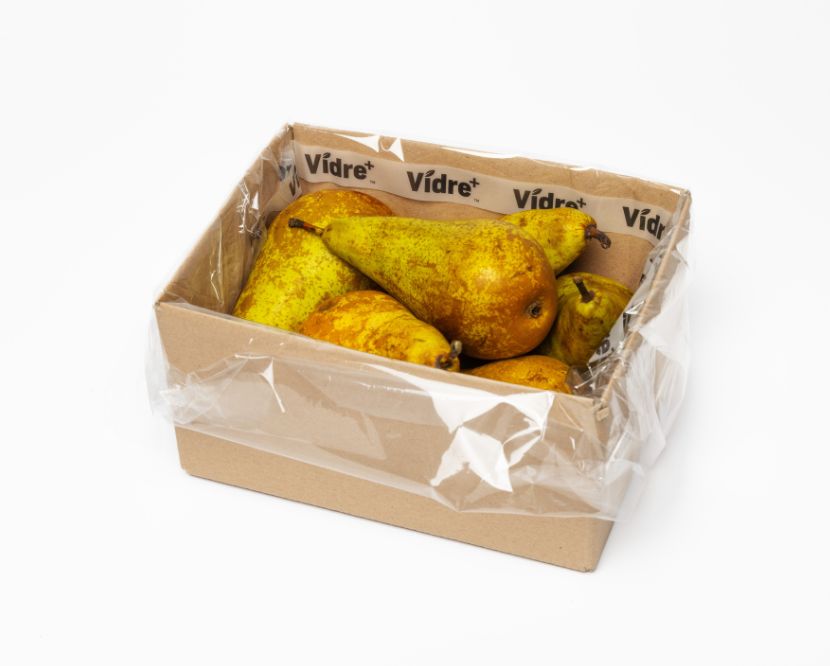
A new type of active packaging — MCPBag® powered by Vidre+™ — has been shown to slow down pear ripening and keep the fruit firmer for more days. This innovation, designed by Fresh Inset, can help reduce waste and protect fruit quality, especially during long transport and storage.
How it works
MCPBag® powered by Vidre+™ uses an imprinted technology inside the bag that slowly releases a freshness compound called 1-MCP. This compound blocks ethylene, a natural gas that causes fruit to ripen and soften. When pears are packed in MCPBag®, they ripen more slowly and stay fresh for longer — without any need for sealed rooms or extra equipment.
The technology behind MCPBag® is Vidre+™, and it can be applied as a small sticker or label inside regular fruit packaging like trays, clamshells, or bags.
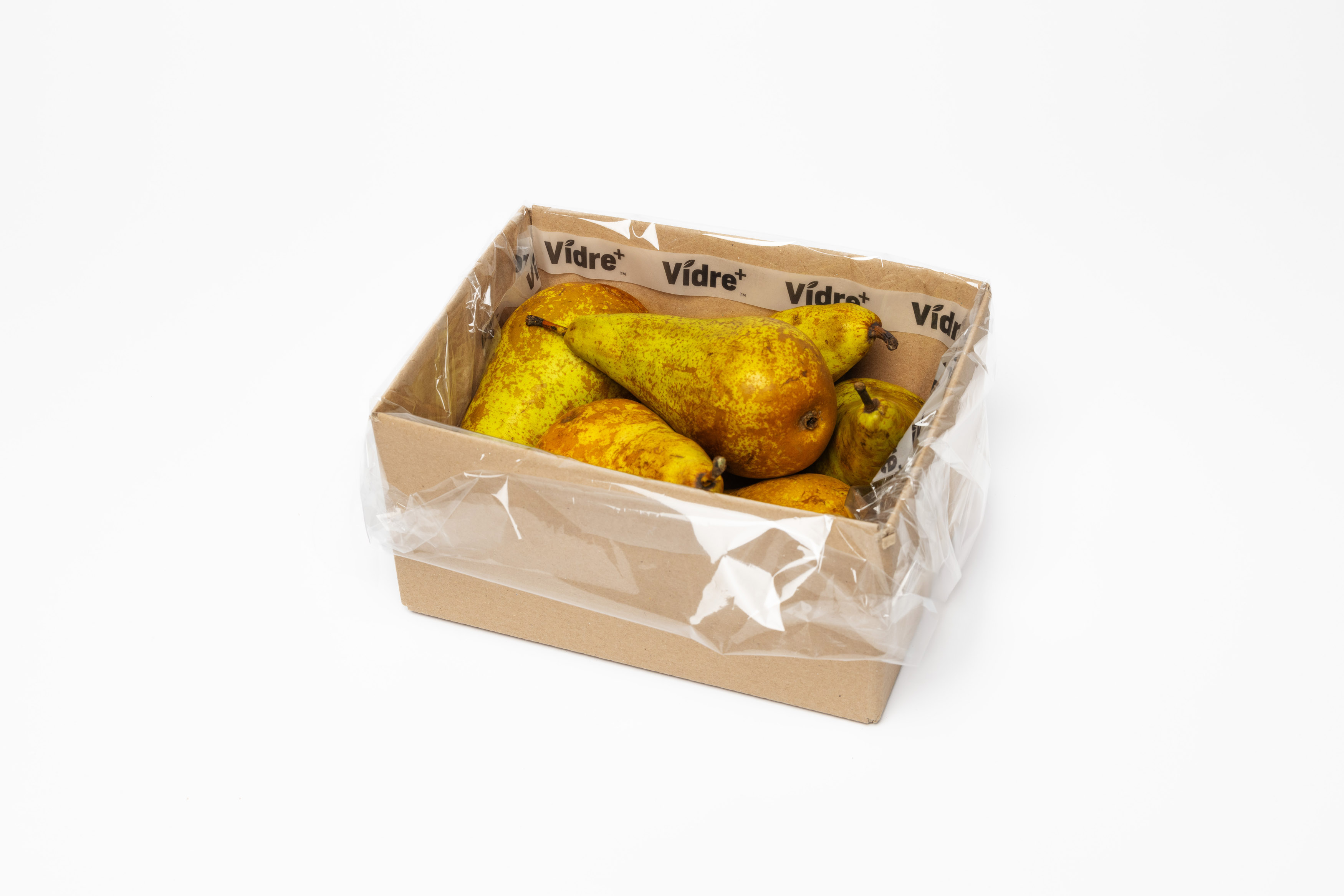
fot. Fresh Inset
What the research shows
Tests were carried out by IDC Patagonia in Argentina on William’s pears. The fruit was stored for short periods (4 days) and long periods (120 days), then placed at room temperature for 8 days to simulate shelf life.
Pears in regular packaging produced much more ethylene and ripened faster — turning soft and yellow. But pears packed in MCPBag® stayed firmer and greener, producing 60% less ethylene. The result was a longer shelf life:
Why it matters
For growers, packers, and retailers, MCPBag® offers a simple way to improve fruit quality, reduce losses, and keep produce fresh longer without changing current packing systems. It’s a smart solution that works inside the package and doesn’t require extra infrastructure.
With global food waste on the rise, solutions like MCPBag® powered by Vidre+™ can make a big difference — helping the fruit last longer from the farm to the store shelf.
fot: photo by Kate Mishchankova on Unsplash
Disclaimer
The study was conducted by a team of researchers from IDCPatagonia (Las Acacias 1062, Cipolletti, RN, Argentina) — L. Vita, N. Gonzalez, and P. Rebolledo — in collaboration with C. Franco from Wassington Agro SACIFEI (Gualeguaychú 2068, Ciudadela, Buenos Aires, Argentina). The authors wish to acknowledge the support of the fruit farm “El Chiche” and Agr. Eng. Raquel Brevi.
The results presented in this press release are based on a single study. Please note that these are preliminary findings. Additional studies may provide further insights and perspectives.
If you are interested in expanding your knowledge about Vidre+™ technology, follow us on LinkedIn or get in touch: krzysztof.czaplicki@freshinset.com
Thank you for reading this article!
***
The Vidre+™ technology is being developed with the support of the European Union under the European Funds for a Modern Economy (FENG) Programme, based on an agreement with the National Centre for Research and Development.



 ENG
ENG PL
PL IT
IT SP
SP FR
FR RUS
RUS CZ
CZ DE
DE UA
UA