

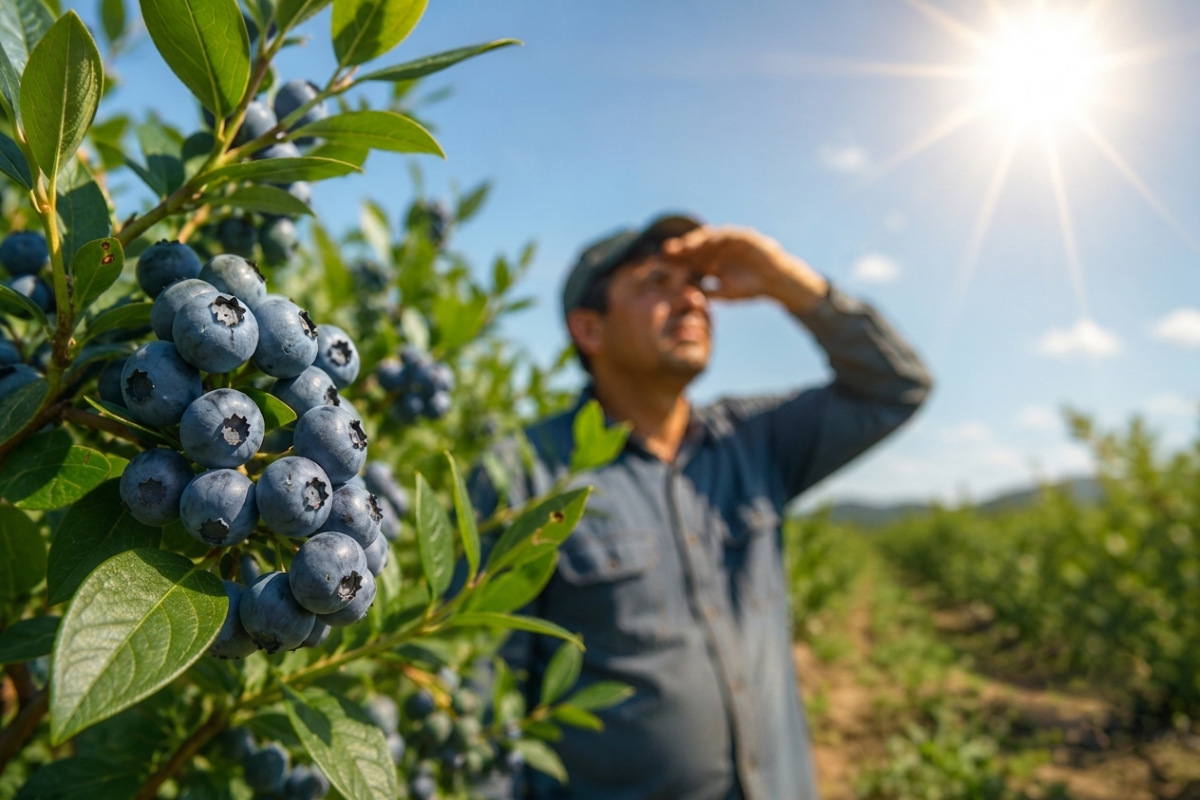
In the modern agricultural supply chain, inconsistency is the primary operational hurdle. As climate patterns become increasingly erratic, marked by intensifying El Niño cycles, prolonged heatwaves, and sudden climatic shifts, fresh produce distributors and retailers face an unprecedented challenge: maintain shelf life when environmental conditions compromise standard approach.
For agricultural supply chains, extreme weather in key growing regions creates immediate bottlenecks. When heat spikes occur, the biological clock of fresh produce accelerates. Without proper intervention, this results in significant retail shrink, wasted inventory, and diminished quality. In this environment, passive storage is insufficient; growers and distributors require active, integrated solutions to stabilize produce quality.
The convergence of extreme heat and unpredictable weather patterns has fundamentally altered the post-harvest landscape. The North American fresh produce sector faces significant operational pressure. Long-range weather forecasts indicate prolonged heat domes, intense El Niño-driven temperature fluctuations, and unpredictable humidity spikes across primary agricultural corridors. Heatwaves in Europe are causing massive deterioration of freshly harvested fruits and vegetables.
For the supply chain, this means produce is frequently harvested under heat stress. When crops are exposed to extreme temperatures prior to reaching the packing house, baseline quality is compromised. During transit, these temperature fluctuations trigger rapid senescence. For retailers, this translates to “retail shrink”. Produce arriving with reduced turgor or spoiling on the shelf, necessitating early markdowns or disposal. As sustainability mandates tighten, the industry can no longer treat this waste as an inevitable cost of doing business.
The immediate challenge is clear: agricultural output must withstand the cultivation phase. The secondary, equally critical requirement is ensuring that the produce that survives the heat reaches the retail shelf without degradation.
This is where advanced Vidre+ shelf-life extension technology, active stickers, labels and imprints become critical. Supply chains cannot control the weather, but they can control the packaging, transport and storage environment. When avocados, blueberries, and leafy greens are exposed to thermal stress, respiration rates spike, accelerating senescence. If these commodities are not properly controlled during sorage and transit, the result is substantial logistics shrink and retail waste.
To understand why Vidre+ is essential, one must look at the biological reality of fruits. They naturally produce ethylene, the “ripening hormone.” Heat acts as a catalyst, signaling the fruit to ramp up ethylene production and accelerate ripening far faster than the supply chain can accommodate.
Traditional post-harvest methods often rely on stationary infrastructure, such as airtight, temperature-controlled cold rooms. However, stationary systems fail when the bottleneck is transit or store shelf. Vidre+ shifts the paradigm by moving protection from storage to box. By utilizing a controlled-release format, Vidre+ provides precision management of the freshness, effectively stabilizing the ethylene over expresion caused by heat stress, regardless of the ambient temperature of the transit container.
Beyond ethylene sensitivity, heat causes an immediate spike in the respiration rate of fresh produce. Warmer produce “breathes” faster, consuming internal sugars and water reserves, leading to dehydration, softening, and loss of turgor, the crispness consumers demand.
The challenge for logistics managers is that once a shipment is on the road, control over internal box temperatures is limited if the cold chain is compromised. Vidre+ technology provides a crucial buffer. By optimizing the internal packaging environment, it helps stabilize the produce’s metabolic rate. When the produce is less responsive to the heat-induced spikes in respiration, it maintains structural integrity longer, ensuring that the firmness and nutritional value defined at the moment of harvest are protected until the product reaches store shelf.
Trial data demonstrates the effectiveness of this approach:
The move toward “active packaging” is the definitive answer to climate-induced logistics challenges. Unlike conventional, large-scale systems that require significant capital expenditure and stationary setup, Vidre+ is a modular, plug-and-play solution.
Whether applied via smart labels, inserts, or integrated into existing packaging, Vidre+ operates at the individual box level. This is critical in the era of El Niño and extreme weather:
The ultimate goal for any supply chain strategy is to increase marketability. In a world of climate uncertainty, shelf-life extension is an effective tool for waste reduction. According to the Food and Agriculture Organization (FAO), natural disasters over the last three decades have caused an estimated $3.26 trillion in lost crop and livestock production.
By delaying the onset of senescence and managing the impact of heat-induced stress, Vidre+ ensures that high-quality produce survives storage and journey. This provides distributors and retailers with an extended marketability window, significantly reducing the rapid inventory turnover that often leads to food waste. As supply chain management moves toward more sustainable, circular models, technology that actively protects the product during transit becomes a necessity for economic and environmental resilience.
Contact us and to find out, how Vidre+ can deliver value to your business.



 ENG
ENG PL
PL IT
IT SP
SP FR
FR RUS
RUS CZ
CZ DE
DE UA
UA