

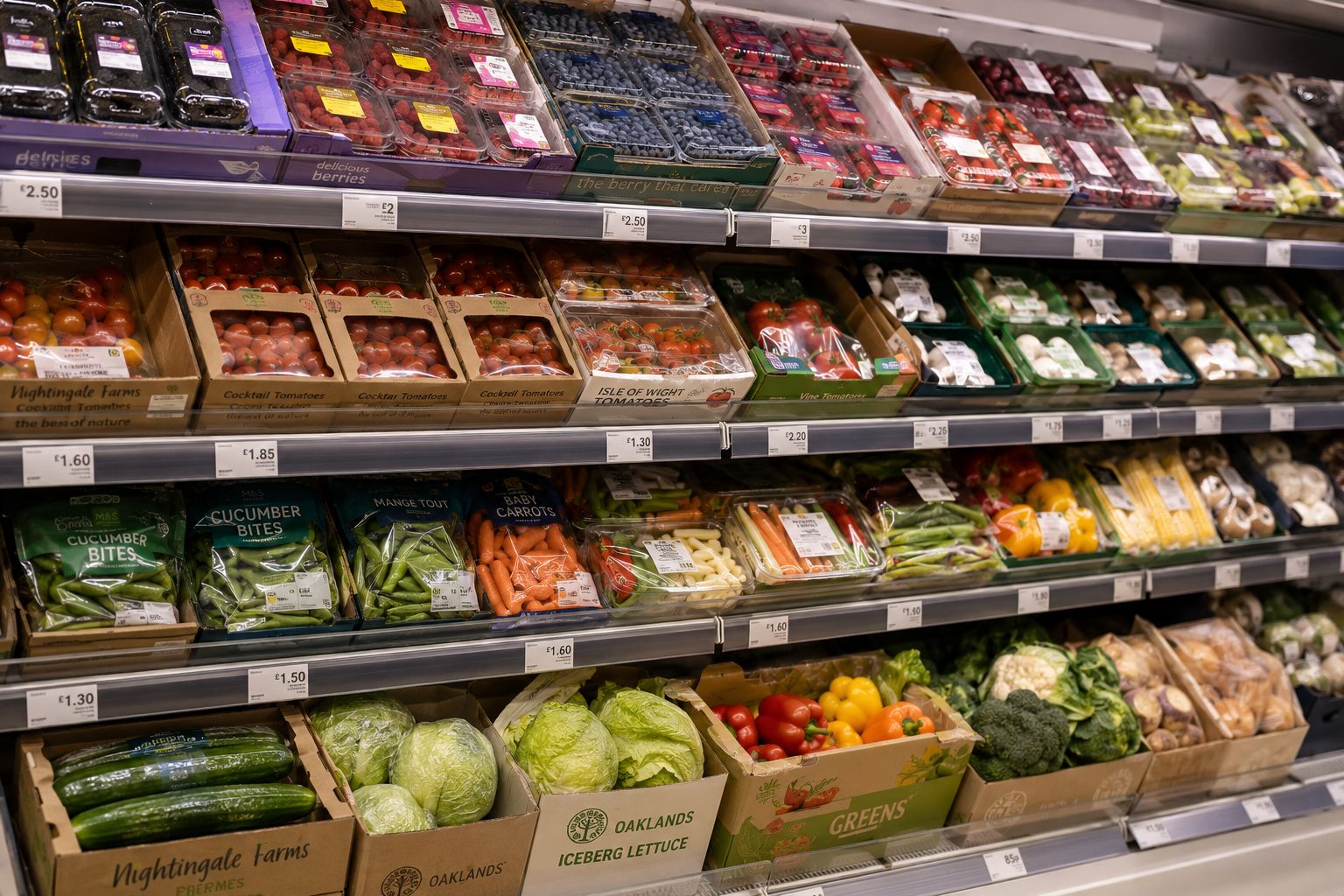
Europe’s packaging landscape is entering a new era. The EU Packaging and Packaging Waste Regulation (PPWR) introduces far-reaching measures intended to reduce packaging waste, improve recyclability and accelerate the transition toward a more circular packaging economy.
For the fresh produce industry, this transformation raises an important question: as packaging changes, how can growers, packhouses, exporters and retailers continue protecting the quality and freshness of highly perishable fruits and vegetables?
This challenge may also create an opportunity for a new generation of active packaging technologies.
Fresh Inset’s patented Vidre+® technology, designed to deliver 1-MCP gradually from within produce packaging, illustrates how freshness-protection technologies could complement the development of new packaging formats and help the industry address two sustainability objectives at the same time: reducing packaging waste and reducing food loss.
PPWR Is Changing the Packaging Landscape
The PPWR introduces a broad set of requirements affecting packaging placed on the EU market.
One provision of particular relevance to fresh produce is the restriction, from 1 January 2030, on certain single-use plastic packaging formats. Annex V of the Regulation includes single-use plastic packaging for less than 1.5 kg of pre-packed unprocessed fresh fruit and vegetables.
The Regulation also recognises that fresh produce has specific protection requirements. Member States may establish exemptions where packaging is demonstrably necessary, for example, to avoid water or turgidity loss, microbiological hazards, physical shocks or oxidation, as well as in certain circumstances involving the separation of organic and non-organic produce.
Further European Commission guidance on the implementation of these provisions is expected before the 2030 restrictions take effect.
The direction of travel, however, is clear: packaging will increasingly need to achieve more with fewer resources and with greater consideration for circularity, recyclability and waste prevention. For the produce sector, that creates a challenge extending beyond the packaging material itself.
Sustainable Packaging Must Still Protect the Product
Fresh produce packaging performs an essential function. It protects delicate products during packing, transportation, distribution and retail. Depending on the crop and packaging system, it can influence moisture loss, physical damage, ventilation and the atmosphere surrounding the product.
Changing packaging materials or formats can therefore change the conditions experienced by the produce throughout its journey. And packaging waste is only one part of the sustainability equation. If a new packaging system uses less plastic but results in greater product deterioration or food loss, part of its environmental benefit can be offset elsewhere in the supply chain.
This is why the transition encouraged by PPWR could increase interest in functional and active packaging: packaging that does more than simply contain and protect a product physically.
The package itself can become part of the post-harvest freshness strategy.
Where Vidre+ Could Fit into the New Packaging Landscape
Fresh Inset developed Vidre+ as a technology for the gradual delivery of active ingridient to inhibit the effects of ethylene in plants.
Ethylene plays an important role in the ripening and ageing processes of many fruits, vegetables and flowers. By interacting with this biological pathway, Vidre+ can help slow ethylene-driven processes and support post-harvest quality.
What makes the Vidre+ concept particularly relevant to the changing packaging environment is the possibility of integrating freshness technology into or alongside the packaging itself.
Vidre+ has been developed for applications including stickers placed inside packaging and broader active-packaging concepts. This opens interesting possibilities as packaging producers and fresh produce companies explore new substrates, formats and packaging designs.
Rather than treating sustainable packaging and freshness protection as two separate challenges, future packaging systems could increasingly address them together.
From Passive Packaging to Active Freshness Protection
The basic Vidre+ mechanism is designed around conditions naturally created by fresh produce.
Once humidity inside the package reaches the required level, the technology is activated. Vidre+ is designed for gradual activation over an extended period.
This approach is particularly interesting from a supply-chain perspective because the freshness-protection mechanism travels with the produce.
The concept therefore differs from post-harvest treatments that depend on treating produce at a particular facility or at a single moment in the logistics chain. Active packaging creates the possibility of integrating the freshness intervention directly with the packaged product.
As packaging systems evolve under PPWR, this kind of flexibility could become increasingly valuable.
An Opportunity for Packaging Producers and Converters
PPWR is not only a challenge for growers and retailers. It is also stimulating innovation among packaging manufacturers and converters.
The next generation of produce packaging will need to balance several objectives:
Adding a freshness-protection function creates another dimension of value.
Instead of competing primarily on the substrate, dimensions or appearance of a package, converters could increasingly differentiate their products through functionality. A simple produce package could potentially become an active freshness-management platform.
For Fresh Inset, this represents an important development opportunity. The transition to new packaging formats creates a natural environment for conversations with packaging manufacturers, growers and retailers about how technologies such as Vidre+ could be incorporated into future packaging systems.
Packaging Waste and Food Waste Should Be Addressed Together
The underlying sustainability argument is particularly important.
PPWR is designed to reduce the environmental impact of packaging. At the same time, reducing food loss and waste remains a major European and global objective. These goals should not be considered independently.
Fresh fruit and vegetables are biologically active products. They continue respiring, losing moisture, ripening and ageing after harvest. The packaging surrounding them therefore has consequences not only for packaging waste but also for the usable life of the food it contains.
This creates an opportunity to rethink what sustainable packaging means.
The most effective future solutions may not simply use less material. They may combine resource-efficient packaging with technologies that help protect the product for longer.
For high-value and highly perishable produce, even relatively small improvements in quality retention can have consequences throughout the supply chain: greater logistical flexibility, less product rejection, lower shrink and more produce reaching consumers in marketable condition.
A New Innovation Window for the Fresh Produce Industry
PPWR should not be viewed simply as a deadline for replacing one packaging material with another. It is an opportunity to rethink the function of packaging itself.
As growers, retailers and packaging manufacturers adapt to the new European framework, the industry will need solutions capable of reconciling environmental ambitions with the realities of fresh produce. This is precisely where active freshness technologies could play an increasingly important role.
Vidre+ offers an example of what that future could look like: packaging that does not merely contain fresh produce, but can actively participate in maintaining its quality during the supply chain.
The exact packaging formats of the future are still evolving, as are the detailed implementation pathways associated with PPWR. But one principle is already becoming clear:
The future of sustainable fresh produce packaging will need to consider both the package and the product inside it.
For Fresh Inset and its partners across the produce and packaging industries, that transition creates a significant new field for innovation.
Exploring the Next Generation of Fresh Produce Packaging
Fresh Inset works with growers, packers, distributors, retailers and packaging partners to explore applications of Vidre+ technology across fresh produce supply chains.
As the European packaging market evolves, Fresh Inset sees an opportunity to investigate how active freshness technologies can complement new packaging materials and formats while helping protect the quality and value of fresh produce.
Interested in exploring how Vidre+ could work with your crop, packaging format or supply chain? Contact Fresh Inset to discuss potential applications and commercial trials.



 ENG
ENG PL
PL IT
IT SP
SP FR
FR RUS
RUS CZ
CZ DE
DE UA
UA