


Spring 2026 frost events across North America and Europe expose a deeper vulnerability in the food supply chain. Thus elevates the urgency of protecting every unit that survives to harvest. As orchards and vineyards across the Northern Hemisphere prepare for what should be a season of renewal, spring has instead delivered a sobering reminder of agriculture’s oldest adversary: late-season frost.
Europe is currently facing a severe wave of frost that has wiped out a significant share of the potential harvest of apples, grapes, plums, cherries, and early varieties of raspberries. In Michigan’s southwest fruit belt, consecutive freeze events on April sent temperatures plunging into the low 20s Fahrenheit (-6,7°C) during critical bloom windows. In the mid-Atlantic, a late-April freeze wiped out roughly 60% of apple blossoms and 40% of cherries at some operations. The damage stretches well beyond any single growing region.
Climate science adds further urgency: as winters warm, trees break dormancy earlier and expose vulnerable floral tissue to the same late-frost window that has always existed on the calendar. Research published in Climatic Change (Springer Nature) found that compound climate events could increase frost-damage risk for apple trees in certain European regions by up to 10% relative to present-day levels in a 2°C warmer world — not because frosts become more frequent in absolute terms, but because crops bloom earlier into their path.
The Hidden Loss: What Happens After the Frost
Frost damage on the farm is visible. The damage that follows in the supply chain is not.
In a year already defined by constrained field yields, the post-harvest phase becomes disproportionately consequential. According to the FAO, approximately 45% of all fresh produce is either lost or wasted annually along the supply chain. Among fruits and vegetables specifically, FAO data show that 61% of fruits and 56% of vegetables are still lost or wasted after harvest.
According to a 2026 report published by Avery Dennison in cooperation with the Centre for Economics and Business Research (Cebr), fresh produce waste is projected to generate approximately $88 billion in global economic losses annually, making it one of the most costly categories of food waste in the supply chain. The report highlights that produce losses occur not only at retail level, but throughout transportation, storage, and distribution.
The primary driver of this post-harvest deterioration is ethylene, a natural plant hormone that accelerates ripening, softening, and senescence. Even at concentrations measured in parts per billion, ethylene accelerates the ripening process and shortens commercial shelf life, triggers softening, browning, and loss of visual quality, increases susceptibility to pathogenic decay, and initiates a self-reinforcing cascade in climacteric crops such as apples, tomatoes, and stone fruit.
The consequence in a frost year is compounding: reduced harvest volumes collide with accelerated post-harvest spoilage, compressing the window for distribution and sale. Every box lost in shipment or at retail in a season of scarcity represents an outsized economic blow.
A Strategy: Frost Management & Post-Harvest Technology
The 2026 spring frost season underscores a structural recalibration underway across the fresh produce industry.
For decades, the industry’s primary response to climate risk was focused upstream: breed more resilient varieties, invest in frost irrigation, deploy wind machines. These measures remain valuable but are, by nature, probabilistic. When temperatures cross the critical threshold, no agronomic intervention can reclaim what is lost in the field.
Andrzej Wolan, CEO of Fresh Inset, said: “Post-harvest management, long treated as an operational formality, is now emerging as a core economic lever. In a constrained supply environment, every percentage point of saved marketable product translates directly into revenue. Shelf-life extension enables broader distribution reach and superior price optimization, while waste reduction becomes simultaneously an economic and sustainability imperative. Consistent quality under logistics pressure strengthens relationships in the whole supply chain.”
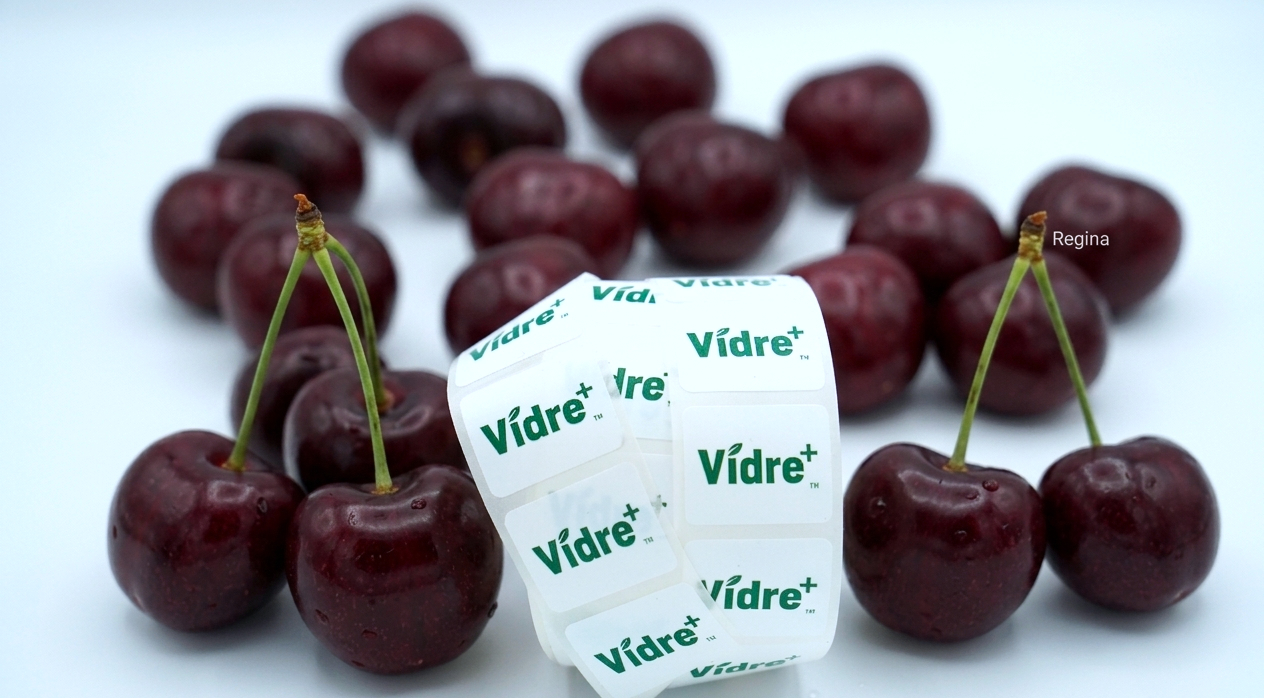
Fresh Inset’s Vidre+ is a disruptive post-harvest protecting system. Applied as an internal label within produce or floral packaging, or printed directly onto packaging materials, Vidre+ helps slow down ripening and senescence processes caused by ethylene exposure.
The technology holds GRAS (Generally Recognized As Safe) status from the U.S. Food and Drug Administration, leaves no residue on produce, and requires no additional equipment or disruption to existing packing line operations.
Real-world performance data from trials at multiple stages of the value chain demonstrates measurable shelf-life extension across the crops most vulnerable to spring frost events:
– Cherries: up to +21 days of good quality and well-maintained nutritional value
– Tomatoes: +12 days, with 100% of crops preserved in controlled trials
– Bell pepper: up to 12 extra days to ship and sell
– Avocados: +21 days more,
– Limes: extra 8 days of good quality
In commercial deployments, Vidre+ has demonstrated ROI multiples ranging, driven by reductions in weight loss, markdowns, and retail shrink.
Looking Ahead
The lesson of spring 2026 is not new, but it has never been more clearly stated: agricultural resilience will not be built solely in the field. It will require integrated strategies that combine climate-aware production practices, predictive risk management, and advanced post-harvest technology.
Fresh Inset’s Vidre+ is positioned at the center of that shift, as a practical, scalable, and scientifically validated tool that helps growers, packers, and suppliers retain the maximum possible value from every unit of produce that reaches the packing phase, regardless of what happened in the orchard before.
“In a reduced-yield season, the competitive advantage belongs to those who protect quality beyond the farm gate. Post-harvest technology is no longer a nice-to-have, it is a risk management essential,” says Andrzej Wolan, CEO of Fresh Inset.
Sources: MSU Extension Fruit Updates (April 8, 15, 22, 2026); UPI April 24, 2026; PNAS (Zohner et al., 2020); Climatic Change (Hoffmann & Rath, 2019); FAO Food Loss and Waste reports; FreshPlaza (May 2022); Carbon Brief (March 2026); $540 billion global food waste bill exposed for 2026 (https://www.averydennison.com/en/home/news/press-releases/540-billion-global-food-waste-bill-exposed-for-2026.html)



 ENG
ENG PL
PL IT
IT SP
SP FR
FR RUS
RUS CZ
CZ DE
DE UA
UA