

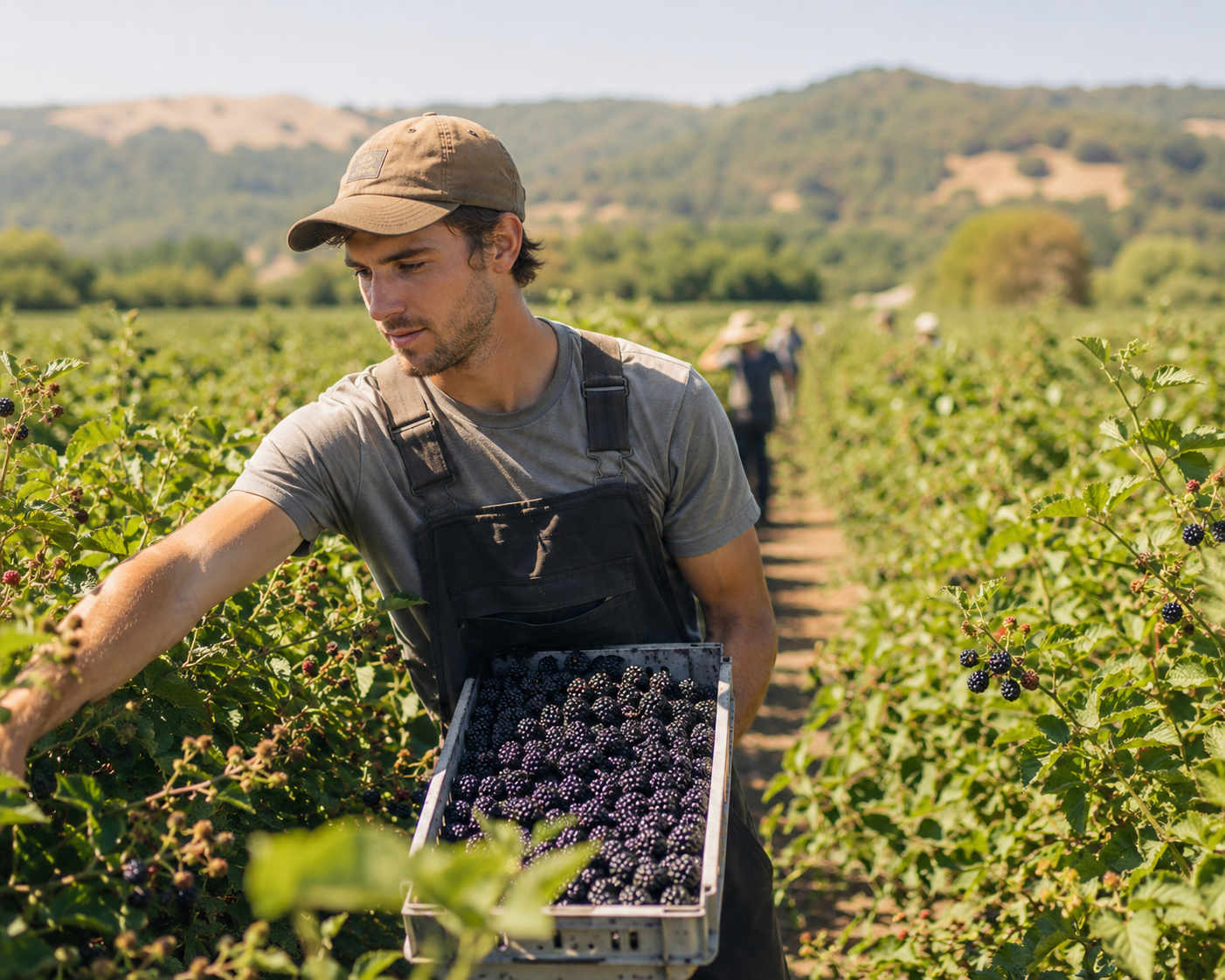
Every year after a season of fighting weather and pests, growers have every reason to look closely at what can still protect the harvest: shelf-life extension for any crop and any packaging, with no new equipment needed.
When the growing season ends and the harvest begins, months of work finally become something that can be sold.
Growers manage drought, heat, floods, frost, disease and pests long before a crop is picked, and heat keeps working on produce even after it leaves the field, as Fresh Inset’s article on produce quality after heatwaves explains. With so many factors outside a grower’s control, the ones that can still be managed after harvest deserve a closer look.
Chief among them: how much of the crop reaches a buyer in sellable condition. That question decides whether a season of labor, inputs and risk is paid for. Vidre+® active packaging from Fresh Inset works inside the packs growers already use, at any scale, so more of the harvest can be sold without building anything new.
Post-Harvest Losses: The Part of the Season Still in Play
Once the crop is picked, a different kind of loss begins. According to FAO’s latest global estimate, 13.3% of the world’s food is lost between harvest and retail. Fruits and vegetables suffer the highest losses of any food group, at 25.4%. Mold is part of that loss, since gray mold (Botrytis) can keep developing long after the crop leaves the field.
A box lost after harvest carries the full cost of land, labor, inputs and transport, with no revenue to offset it. That makes post-harvest management one of the few levers still in a grower’s hands once the crop is picked.
Post-Harvest Handling Basics: The First Hours After Picking
Guidance from Penn State Extension on berries, among the most perishable crops, sets out basics that hold for many fruits and vegetables:
Each of these steps buys time. The package can add more of it.
How to Take Care of What the Season Left
Shelf-life extension does not have to mean an expensive installation. For years, slowing ripening after harvest depended on sealed storage rooms, an approach used mainly for apples and pears. Fresh Inset patented a delivery technology that moves that capability out of the storage room and into the package. The result: any crop, any packaging, from clamshells and punnets to flow-pack bags.
No new equipment is needed. On a farm, Vidre+® can be a single sticker on the punnet or clamshell already in use; on a high-volume line, it integrates into existing packaging lines.
The same sticker or imprint can also carry the grower’s own logo, putting the farm’s name in front of every buyer and shopper who picks up the pack.
How Vidre+® Works
After harvest, produce keeps respiring and losing water, and many crops respond to ethylene, the natural plant hormone that drives ripening and softening.
Vidre+® is a patented active packaging technology that targets that same ethylene response. Its active complex is released gradually inside the package, slowing the dynamics behind softening and dehydration.
Vidre+® is a safe technology for food: it holds GRAS (Generally Recognized As Safe) status from the U.S. FDA and complies with EU and U.S. food-safety regulations.
Verified Results on Crops Growers Know Well
In trials against control packaging, Vidre+® delivered results that translate directly into days to ship and units to sell:
Turning More of the Harvest Into Income
For growers, the value is measured in income:
Every additional box sold is one more box that pays for the season behind it.
Frequently Asked Questions
How can growers keep produce fresh longer after harvest?
Fast cooling and careful handling come first. Active packaging such as Vidre+® then slows softening and dehydration inside the pack.
How can berries be kept from going moldy before they are sold?
Berries are highly susceptible to gray mold (Botrytis), so fast, steady cooling and removing damaged fruit at picking both help.
What can a small farm do when produce must be sold before it spoils?
Every extra day of marketability gives more time to find buyers, and Vidre+® works at any scale, down to a single sticker on a clamshell.
Is Vidre+® safe for food?
Yes. Vidre+® holds GRAS status from the U.S. FDA and complies with EU and U.S. food-safety regulations.
About Fresh Inset & Vidre+®
Fresh Inset is a biotech company developing active packaging technology for fresh produce. Its patented Vidre+® technology works with any crop and any packaging and requires no new equipment.
Growers and packers interested in testing Vidre+® on their own crops can contact Fresh Inset to request a trial.


 ENG
 PL
 IT
 SP
 FR
 RUS
 CZ
 DE
 UA
